
Cultural commentary
When a Collection Becomes a Personal Archive
A collection becomes an archive when arrangement, documentation, and memory begin to record not only objects, but a person's changing questions and encounters.
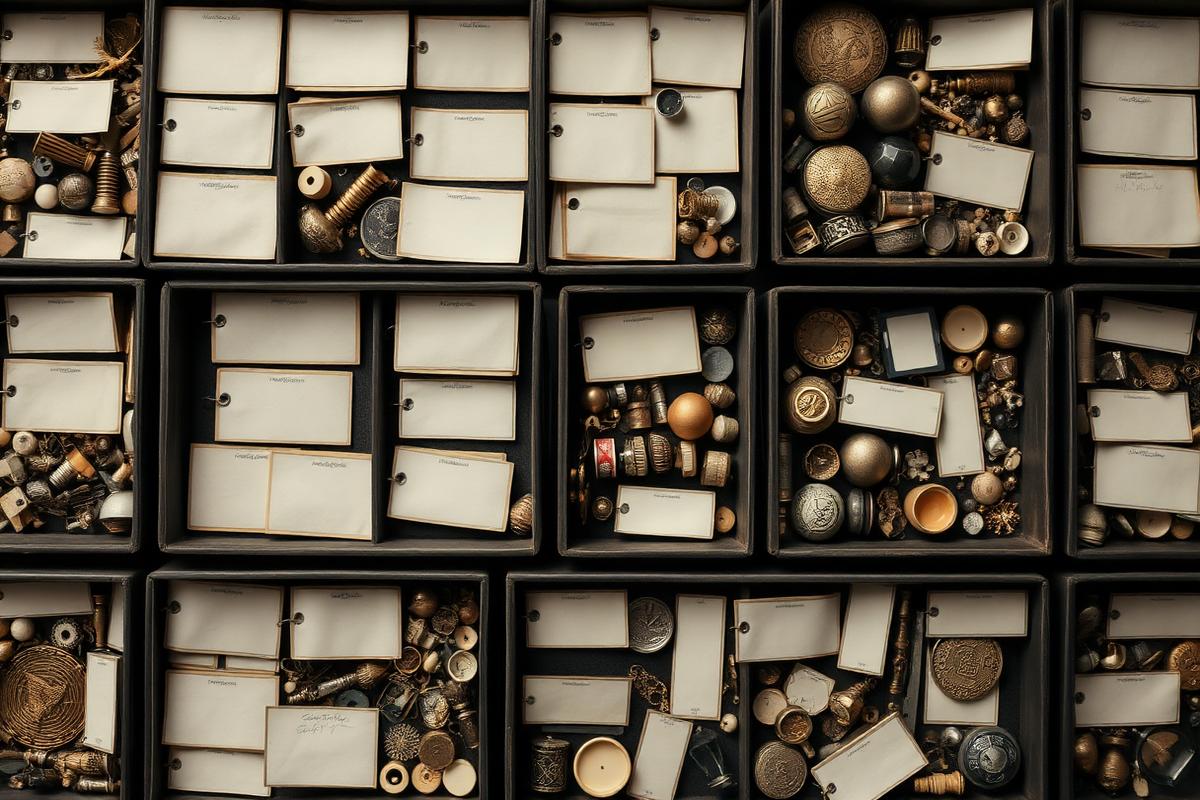
Summary answer
The short answer
A collection becomes a personal archive when its objects and records preserve a pattern of inquiry, relationships, places, and decisions. Cataloguing turns accumulation into interpretable evidence. The archive remains selective and subjective; its gaps are part of the story.
From group to record
Quantity alone does not make an archive. A personal archive emerges when objects retain context: where they came from, why they were chosen, what they changed in the collector's understanding, and how they relate to one another.
A small, coherent group with careful notes may communicate more than a room of undocumented material.
Classification reveals the collector
Every arrangement contains an argument. Sorting by maker, date, material, place, theme, or personal chronology emphasizes different relationships. Categories that feel natural are choices with consequences.
Reclassification is equally revealing. As knowledge changes, an object once treated as central may become evidence of an early assumption or a market fashion.
Provenance includes ordinary encounters
Formal provenance tracks ownership and can address authenticity and lawful transfer. A personal archive may also record who introduced an object, the journey to find it, or the conversation that changed its meaning.
These softer records should be distinguished from verified historical facts. Both matter, but they answer different questions.
Gaps are part of the archive
What is absent can show budget, access, taste, historical erasure, or a deliberate refusal to collect indiscriminately. Completion is often a fiction imposed by catalogues and markets.
Acknowledging gaps makes the archive more honest. It also creates room for future keepers to interpret rather than merely maintain a frozen system.
An archive needs a future reader
Labels, photographs, inventories, condition notes, and digital backups make private knowledge transferable. Without them, significance can disappear in a single generation.
Access need not mean public display. It means ensuring that someone besides the collector can understand what the objects are, why they were gathered, and what responsibilities accompany them.
Frequently asked questions
Sources and further reading
- Why They Collect: Collectors Reveal Their Motivations - Journal of Social Behavior and Personality (1991)
- Material Memories: Design and Evocation - Berg (2009)
- Possessions and the Extended Self - Journal of Consumer Research (1988)
- Our Special Possessions: An Inquiry Into the Ways in Which We Attribute Meanings to Consumer Goods - Journal of Consumer Research (1987)