
Editorial analysis
Why Handmade Objects Feel More Human
Evidence of a maker's hand can make labor, judgment, variation, and care perceptible in the finished object.
Summary answer
The short answer
Handmade objects may feel more human when buyers infer that a maker invested time, skill, intention, and care. Research calls this the handmade effect. The response depends on context and belief; handmade is not a guarantee of quality, ethics, authenticity, or emotional connection.
Seeing decisions in the surface
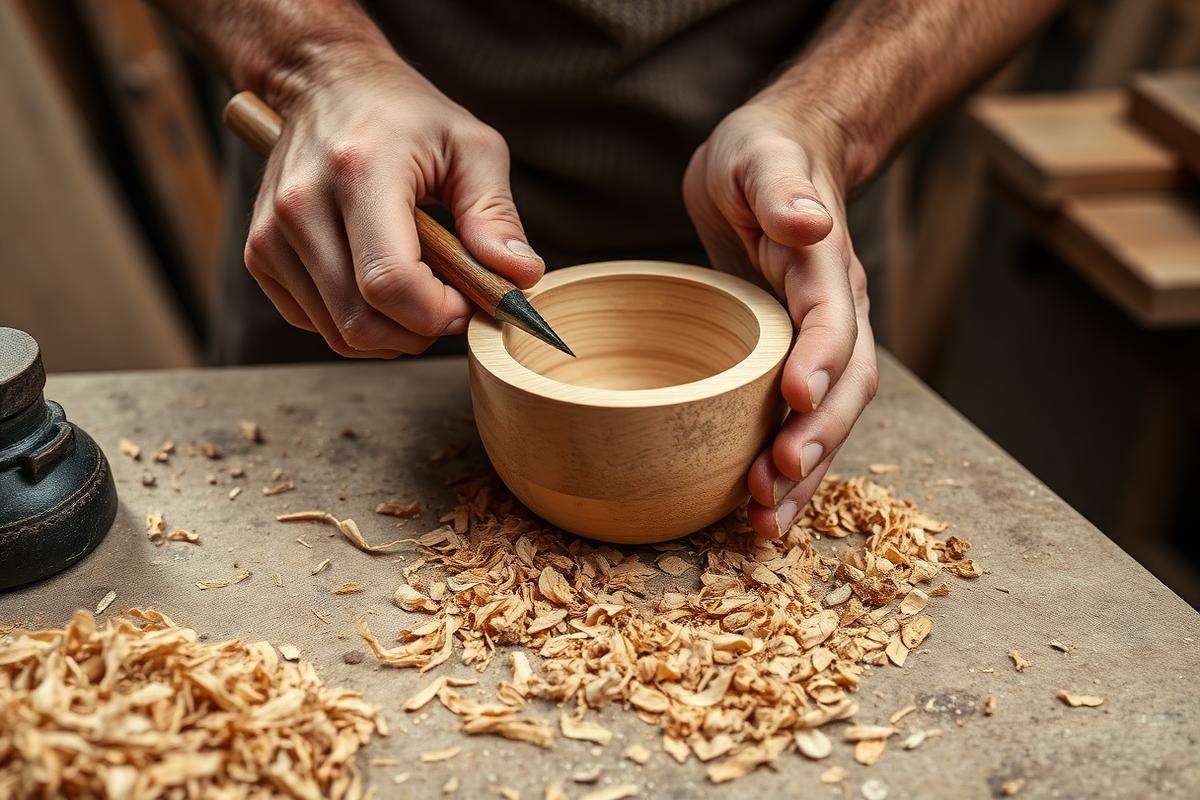
A handmade object often preserves small decisions: where a line thickened, how grain redirected a cut, or where a repair became preferable to restarting. Variation can make the process imaginable.
Industrial objects also embody human design and skilled labor. The contrast is not human versus machine, but different degrees to which work remains visible and attributable.
The handmade effect
Consumer research has found that describing products as handmade can increase perceived attractiveness through inferred love or care. This is an average experimental pattern, not proof that every handmade object was lovingly made or that every buyer responds alike.
The label can itself become marketing. Credible craft claims should identify maker, place, process, materials, and the parts genuinely completed by hand.
Skill becomes a form of attention
Learning how an object was formed changes what an observer can see. Tool marks become evidence of sequence; a join becomes a solution to force and movement; glaze variation reveals atmosphere in a kiln.
This knowledge can deepen appreciation because it keeps the object intellectually active. It can also help buyers distinguish meaningful process from decorative irregularity manufactured to simulate it.
Imperfection is not the point
Handmade does not mean careless, and irregularity alone does not create soul. Mastery often appears as control, consistency, and fitness for use, with variation occurring inside a disciplined process.
Nor should romantic language hide labor conditions. Fair compensation, safe work, material traceability, and repair support may be more consequential than a sentimental story about the hand.
A relationship made legible
The most affecting craft object can make relationships visible: maker to material, tool to hand, owner to use, and repairer to future life. Its humanity lies not in mysticism but in perceivable choices and continued care.
That relationship can exist in a humble bowl or a complex watch. Price may reflect labor and rarity, but attention remains the more revealing measure.
Frequently asked questions
Sources and further reading
- The Handmade Effect: What's Love Got to Do with It? - Journal of Marketing (2015)
- The IKEA Effect: When Labor Leads to Love - Journal of Consumer Psychology (2012)
- Broken: Mending and Repair in a Throwaway World - Cooper Hewitt, Smithsonian Design Museum (2020)
- The State of Psychological Ownership: Integrating and Extending a Century of Research - Review of General Psychology (2018)