To the uninitiated, serious collecting can seem like madness. Why would someone spend years hunting a particular watch reference? Why fly across continents for a piece of pottery? Why dedicate an entire room-or building-to a single category of objects? We spoke with five legendary collectors to understand what drives the obsession.
The Watch Collector: David Chen
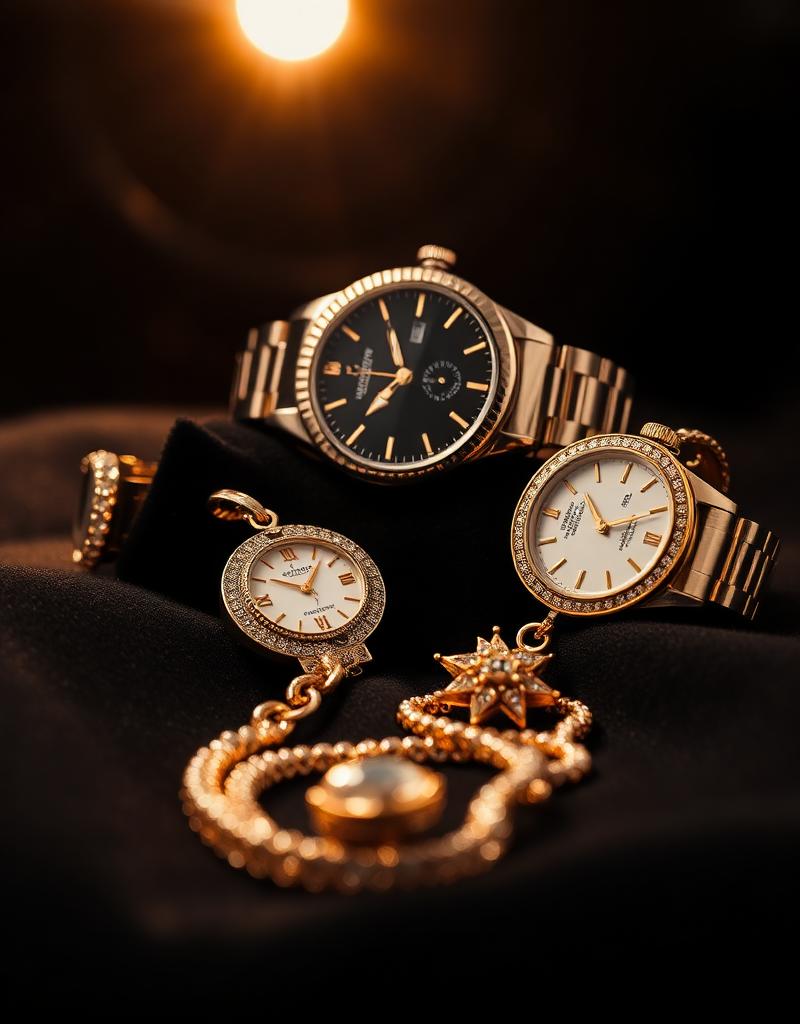
David Chen's collection of vintage Patek Philippe perpetual calendars is considered one of the finest in private hands. He spent fifteen years assembling it, sometimes waiting half a decade for a single reference to appear at auction.
"People ask why I collect watches that keep worse time than a $20 Casio. They're missing the point entirely. I collect frozen moments of human ingenuity. Each movement represents thousands of hours of problem-solving by people who are long dead. I'm preserving their genius."
Chen describes the hunt as more satisfying than the acquisition. 'The moment you get a piece, the dopamine fades fast. But the years of searching, the relationships you build, the knowledge you accumulate-that's the real collection. The watches are almost receipts for the journey.'
The Art Collector: Samira Okonkwo
Samira Okonkwo began collecting contemporary African art before it was fashionable-or affordable. Today, her collection includes works by artists whose pieces now sell for millions, acquired when they were unknown.
'I never collected for investment,' she insists. 'I collected because certain works made it impossible to look away. The financial appreciation was an accident of passion. If you collect trying to predict the market, you'll get neither art nor returns.'
Okonkwo's advice for aspiring collectors: 'Live with art before you buy it. If a gallery won't let you try a piece in your home, find another gallery. And never buy anything you wouldn't want to look at every day for the rest of your life. The best collections are intensely personal.'
The Wine Collector: Pierre-Marie Laurent
Pierre-Marie Laurent's cellar in Burgundy contains over 30,000 bottles, including verticals of grand cru Burgundy going back to the 1940s. But he's equally proud of his collection of obscure natural wines from unknown producers.
'Wine collecting has a dirty secret,' Laurent confides. 'The most sought-after bottles are often disappointing to drink. They're collected as trophies, not as wine. My greatest drinking experiences have come from bottles worth €20 from winemakers you've never heard of.'
- Start with regions, not producers-understand terroir before chasing labels
- Drink more than you cellar-the point is pleasure, not accumulation
- Build relationships with winemakers-allocations matter more than auction wins
- Accept that great bottles require great occasions-wine is for sharing
- Document everything-your own tasting notes are worth more than critic scores
The Book Collector: Eleanor Hartley
Eleanor Hartley's collection of first edition modernist literature is legendary among bibliophiles. Her copy of Ulysses, signed by Joyce, is rumored to be worth over a million dollars. But she speaks more passionately about the books that cost her fifty pounds.
"A book is a conversation across time. When I hold a first edition of Mrs Dalloway, I'm holding the same object that Woolf saw come off the press. The same pages that readers touched in 1925. That connection is what I'm collecting-not paper and ink."
Hartley worries about the future of book collecting. 'Young people don't read physical books the same way. They may never understand why condition matters, why the right dust jacket can be worth more than the book. It's a dying form of connoisseurship.'
The Design Collector: Hiroshi Tanaka
Hiroshi Tanaka has spent forty years collecting 20th-century furniture and industrial design. His Tokyo warehouse contains chairs by every major designer of the last century, along with hundreds of anonymous objects he finds equally compelling.
'I collect solutions,' Tanaka explains. 'Every object represents someone solving a problem-how to sit comfortably, how to illuminate a room, how to organize a desk. The history of design is a history of human problem-solving. My collection is a library of solutions.'
Unlike many collectors, Tanaka actively uses his collection. 'Objects are meant to be touched. A chair that no one sits in is just sculpture. I rotate pieces through my home and office. Living with design teaches you things that looking at it cannot.'
What Collectors Have in Common
Despite their different domains, these collectors share certain traits. All describe an early, formative encounter with their category-a moment when something clicked. All have developed deep expertise, often exceeding that of professional dealers. All speak of the community of collectors as a kind of family.
And all struggle to explain why they collect to those who don't. 'It's like trying to explain why you love someone,' Chen reflects. 'You can list qualities, but the list never captures the thing itself. Collecting is a form of love. Either you feel it or you don't.'
The Question of Legacy
Each collector has thought carefully about what happens to their collection. Some plan museum donations. Others hope to pass collections to children. A few admit they'd prefer their collections dispersed at auction, giving the next generation of collectors the thrill of the hunt.
'The best thing that could happen to my watches,' Chen muses, 'is that they inspire someone else the way they inspired me. Objects should circulate. Being a collector means being a temporary custodian. The collection existed before me and will exist after me. I'm just the current caretaker.'
Perhaps this is what unites all serious collectors: the recognition that they are part of something larger than themselves. Collecting isn't just about acquiring things-it's about participating in a tradition of care, connoisseurship, and cultural preservation. It's about love that transcends possession.